Showing posts with label It's outside the grape.. Show all posts
Sunday, June 17, 2012
Esoteric Wine Tasting Metaphors
Even though many have seen the acclaimed musical version, I suspect that only a few have read Miguel de Cervantes’ lengthy, two-part epic Don Quixote de La Mancha. But if you are one of them, and you are also an enthusiast of the highest wine-knight-errant order, you likely know that Sancho Panza, Quixote’s devoted squire and sidekick was also a discerning, appellation-wise oenophile.
Well into the glorious quest for the unreachable star, is an offhanded description of an exchange between Sancho and another knight-errant’s squire. While Quixote and the Knight of the Grove were discussing their chivalric deeds and desires, their two squires settled in beneath a tree to discuss items of a more corporeal nature—food and wine. And much to Sancho’s delight, the Grove’s squire offered to share some of his that he had attached to his horse’s saddle. After a few ravenous gulps of rabbit and several lengthy draws of red wine from the bota, Sancho exclaimed, (in my modernized interpretation) “Son of a bitch, that’s delicious! And really complex!”
While still savoring the wine’s finish, Sancho next offered that it likely came from the province of Ciudad Real. Upon hearing that, the Grove’s squire added, "O rare wine-taster! Nowhere else indeed does it come from, and it has some years' age too!"
Not wanting to be upstaged, Sancho countered, “What would you say sir to my great natural instinct in judging wines, that you have only to let me smell one and I can tell positively its country, its kind, its flavor and soundness; the changes it will undergo, and everything that pertains to a wine? . . . But it is no wonder, for I have had in my family, on my father's side, the two best wine-tasters that have been known in La Mancha for many a long year . . . .”
Sancho next relates an incident when his relatives were asked to taste and assess a red wine from an innkeeper’s barrel. One tasted it and observed it had a slight mineral taste somewhat like iron, while the other noted it also had a slight nuance of leather. The innkeeper, however, assured them the barrel was clean and nothing was added to the wine to account for those unusual flavors. Nevertheless, the two stuck by their assessments. Weeks later, after all the wine was sold and the empty cask was prepared for clean out, the innkeeper was taken aback by the following in the bottom of the barrel: a small key to which was attached a cordovan fob. They had indeed detected the subtleties of iron and leather.
If Sancho Panza and his relatives were not fictional characters, they would be part of that rarified group of “supertasters” that, according to scientific findings, comprise about 25% of the population. Another 25% make up the lower echelon who unfortunately have no idea what they’re eating or drinking, while the rest of us, the “normal” tasters, account for the remaining 50%. Sensitive taste buds are what separates the “haves” from the “have-nots,” but the study affirmed that this sensitivity is likely an inherited trait.
One, however, shouldn’t be the least bit concerned or insecure about not being able to discern--for example--graphite, leather, camphor, undergrowth, minerals, forest floor, tar, bacon, petrol, truffles, loam, exotic herbs and spices, cats pee, or other obscure descriptors that “supertaster” wine critics seem to ferret out and describe. As normal tasters, we need only to sniff, swirl, sip and enjoy. More to the point, esoteric wine tasting metaphors, while fun and engaging at tasting seminars, are really not central to wine’s purpose which is to complement the food we eat.
Sunday, May 27, 2012
How To Pair Food And Wine
Food and wine pairing continues to be a lively topic. There are books and Internet sites that are 100% devoted to the pursuit of the perfect match, and each proclaims its latest insight, recommendation and/or discovery. It was not always so, of course. Before globalization and the resultant world-wide availability of wine, people ate the food that was locally grown and washed it down with whatever wine they or their neighbors produced. It was sustenance’s natural law. Moreover, one ate and drank to survive, and it didn’t matter if the pairing hit his or her hedonistic hotspots.
Fast forward to today, and things are quite different. Cassoulet, that rustic, peasant dish from southwestern France was usually sided with the local, dark-as-night Cahors. Now, one can substitute a California Zinfandel or an Australian Shiraz. Similarly, Alsatians often enjoyed their rich, communal Choucroute Garni with Riesling or Pinot Gris. Currently, any crisp oak free, white from just about anywhere will suffice. And who would have thought that authentic Sashimi would ever be on the Sushi counter next to a Spanish Cava or similar sparkling wine?
Globalization, of course, is the key to those transformations, but I think the answer lies—at least partially—elsewhere. While many still regard food and drink as a “fuel stop” to satisfy the hunger and slake the thirst, there is now a sizeable group of food and wine enthusiasts who see it differently. They don’t simply eat, they dine. They don’t just swallow, they savor. Enjoying food and wine is a gastronomic experience that gratifies the intellect just as much as it satisfies the basic human need for nourishment. Let’s take a look at a couple ways one can approach and/or realize this near-spiritual state of mind.
One can adopt the method utilized by Sommeliers and other high priests of food and wine matrimony. In reaching their recommendation, they claim for the perfect union to occur there should be a synergistic coupling, (complementary or contrasting), of the parallel components (acidity, sweetness, bitterness) of both the food and the wine. This wedded bliss first takes into consideration the wine’s style and structural components and then, second, relates those details to the recipe’s style (casual or upscale) and mode of preparation (braising, grilling, etc.). After contemplating all those particulars, the perfect match is selected. While that elite group has the wine and culinary proficiency to solve that equation, the rest of us simply don’t. So, let’s look at another approach for pairing of food and wine.
A more user-friendly method involves what I call “the modern update” of an ancient maxim: “Red wine with red meat, white wine with white meat, fish and poultry.” Don’t chortle, because that old adage really is a good starting point. Red meat, with its rich, abundant texture and customary methods of preparation, virtually always points to red wine, while fish and poultry, with their delicate flesh and smaller scaled preparations, often can be enjoyed with many white wines. (Veal and pork, however, occupy an interesting middle ground.)
Food and wine enthusiasts have learned to modernize that time-worn maxim by looking beyond the primary ingredient (chicken, beef, etc) and focusing on the recipe’s most dominant or expressive flavors. In and of itself, the flavor/taste spectrum of a recipe’s main ingredient typically is rather narrow, and it normally requires the addition of flavor-enhancing ingredients to highlight its role in the recipe as well as to broaden its versatility. Beyond salt and pepper, those savory aspects emanate from, and are typically characterized by, an almost limitless range of aromatic and flavoring alternatives: herbs and spices, fresh and dried; sauces, salsas and gravies; rubs and marinades; fruits, vegetables and their juices; olive and other fruit and nut oils; wines and vinegars; and creams, yogurts and cheeses just to name a few! The pairing should focus on those particulars, not the primary ingredient.
Take chicken for example; or veal, pork or other “white-wine-only foods.” Depending on how each is cooked, spiced, sauced and finished, any number of red or white wines could be acceptable partners. If, say, sautéed in olive oil and finished with capers, green olives and artichokes, the dominant flavors, and palatal effect, point to something like Sauvignon Blanc, Spain’s Verdejo and similar oak-free white wines with a lively profile that will stand up to those components. However, if braised with onions, garlic, mushrooms, thyme, bacon bits and a splash of beef broth, this rich, earthy combination virtually begs for an inexpensive, full-bodied red like Côtes du Rhône, Rioja Crianza or Nebbiolo d’Alba. And how about if alternately sautéed with a splash of walnut oil, a tad of balsamic vinegar and a few tablespoons of minced apricots? Hmmm? What say you?
In closing, even though the Sommelier method is more precise and may arrive at a more perfect match, “the modern update” is less complicated and, thereby, offers the freedom to explore many cross cultural options. Both of those, however, must give way to personal preferences, no matter how narrow they may be. However, while one certainly should drink whatever one wants, there are many recipes and modes of cooking that beg for a particular style of wine, and that rather implies the willingness to pour something other than one’s favorite Chardonnay or White Zinfandel.
Fast forward to today, and things are quite different. Cassoulet, that rustic, peasant dish from southwestern France was usually sided with the local, dark-as-night Cahors. Now, one can substitute a California Zinfandel or an Australian Shiraz. Similarly, Alsatians often enjoyed their rich, communal Choucroute Garni with Riesling or Pinot Gris. Currently, any crisp oak free, white from just about anywhere will suffice. And who would have thought that authentic Sashimi would ever be on the Sushi counter next to a Spanish Cava or similar sparkling wine?
Globalization, of course, is the key to those transformations, but I think the answer lies—at least partially—elsewhere. While many still regard food and drink as a “fuel stop” to satisfy the hunger and slake the thirst, there is now a sizeable group of food and wine enthusiasts who see it differently. They don’t simply eat, they dine. They don’t just swallow, they savor. Enjoying food and wine is a gastronomic experience that gratifies the intellect just as much as it satisfies the basic human need for nourishment. Let’s take a look at a couple ways one can approach and/or realize this near-spiritual state of mind.
One can adopt the method utilized by Sommeliers and other high priests of food and wine matrimony. In reaching their recommendation, they claim for the perfect union to occur there should be a synergistic coupling, (complementary or contrasting), of the parallel components (acidity, sweetness, bitterness) of both the food and the wine. This wedded bliss first takes into consideration the wine’s style and structural components and then, second, relates those details to the recipe’s style (casual or upscale) and mode of preparation (braising, grilling, etc.). After contemplating all those particulars, the perfect match is selected. While that elite group has the wine and culinary proficiency to solve that equation, the rest of us simply don’t. So, let’s look at another approach for pairing of food and wine.
A more user-friendly method involves what I call “the modern update” of an ancient maxim: “Red wine with red meat, white wine with white meat, fish and poultry.” Don’t chortle, because that old adage really is a good starting point. Red meat, with its rich, abundant texture and customary methods of preparation, virtually always points to red wine, while fish and poultry, with their delicate flesh and smaller scaled preparations, often can be enjoyed with many white wines. (Veal and pork, however, occupy an interesting middle ground.)
Food and wine enthusiasts have learned to modernize that time-worn maxim by looking beyond the primary ingredient (chicken, beef, etc) and focusing on the recipe’s most dominant or expressive flavors. In and of itself, the flavor/taste spectrum of a recipe’s main ingredient typically is rather narrow, and it normally requires the addition of flavor-enhancing ingredients to highlight its role in the recipe as well as to broaden its versatility. Beyond salt and pepper, those savory aspects emanate from, and are typically characterized by, an almost limitless range of aromatic and flavoring alternatives: herbs and spices, fresh and dried; sauces, salsas and gravies; rubs and marinades; fruits, vegetables and their juices; olive and other fruit and nut oils; wines and vinegars; and creams, yogurts and cheeses just to name a few! The pairing should focus on those particulars, not the primary ingredient.
Take chicken for example; or veal, pork or other “white-wine-only foods.” Depending on how each is cooked, spiced, sauced and finished, any number of red or white wines could be acceptable partners. If, say, sautéed in olive oil and finished with capers, green olives and artichokes, the dominant flavors, and palatal effect, point to something like Sauvignon Blanc, Spain’s Verdejo and similar oak-free white wines with a lively profile that will stand up to those components. However, if braised with onions, garlic, mushrooms, thyme, bacon bits and a splash of beef broth, this rich, earthy combination virtually begs for an inexpensive, full-bodied red like Côtes du Rhône, Rioja Crianza or Nebbiolo d’Alba. And how about if alternately sautéed with a splash of walnut oil, a tad of balsamic vinegar and a few tablespoons of minced apricots? Hmmm? What say you?
In closing, even though the Sommelier method is more precise and may arrive at a more perfect match, “the modern update” is less complicated and, thereby, offers the freedom to explore many cross cultural options. Both of those, however, must give way to personal preferences, no matter how narrow they may be. However, while one certainly should drink whatever one wants, there are many recipes and modes of cooking that beg for a particular style of wine, and that rather implies the willingness to pour something other than one’s favorite Chardonnay or White Zinfandel.
Monday, April 16, 2012
Is waiting for wine in paradise worth it?
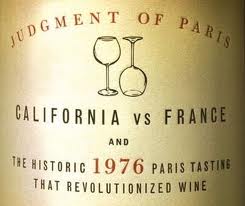
Wine enthusiasts of all levels should be familiar with the competitive tasting that took place in Paris in 1976 between France’s upper echelon Bordeaux and Burgundy wines and their California equivalents. (Click here to browse my condensed version.) George Taber, Time magazine’s Paris correspondent who attended and publicized the event, also covered it in more detail in his book, Judgment of Paris. In addition to that, one very average movie, Bottle Shock, was released in 2006 and focused on a very narrow aspect, while a planned second, more inclusive one seems to be bogged down in litigations.
While it is not the caliber of the above event, there is yet one more incident that I offer for inclusion into your portfolio of potential dinner party topics. This interesting, though somewhat obscure cultural skirmish, The 1999 Franco-Iranian Wine Incident, was brought to light in Rod Phillips’s book A Short History of Wine.
On the French side of this match play episode we have a nation where wine is central to and inseparable from their historical, national and cultural identity. While the Greeks introduced vines to their shores and the Romans extended the plantings to every amenable microclimate, it was the French who turned winegrowing and wine appreciation into an art form. They have utilized wine for gastronomical, nutritional, religious, medicinal, social, and celebratory occasions, as well as—in an appropriate indication of its overarching importance—utilizing wine to seal and formalize official acts of state.
On the Iranian (Islamic) side, we find a culture, which in the early years of wine’s expanding distribution throughout the eastern and western Mediterranean countries, also enjoyed the many social, culinary, and other benefits of wine. However, in the seventh century Mohammed banned its use and consumption after noting that, like most things consumed to excess, it revealed its negative and destructive effects. He immediately banned the production and consumption of this “abomination of Satan’s handiwork,” upon pain of you know what.
During the early planning of 1999’s formal “state visit,” the first one in nearly twenty years, the President of Iran, invoking the inviolate laws of his religion, informed the French that he could not drink wine and, furthermore, would not even sit at a table where wine was being served. On the other hand, a formal visit of heads of state to France, in conformance with France’s historical traditions, demands an official banquet. And any banquet without food and wine, especially for the French, will never be a bona fide banquet. The Iranians couldn’t back down. The French wouldn’t. The event was cancelled and downgraded to a less formal diplomatic occasion where, presumably, something non-alcoholic was consumed and all affronts to both sensitivities were avoided.
You and I know, however, that the Iranians likely missed out on some exceptional wines. However, my Koran-informed sources advise me that abstention, while worthy and upright, is lifelong, delayed gratification that will be amply rewarded in the afterlife. When the pure and virtuous arrive in Paradise, they will have a veritable bounty of goodies awaiting them: “In it are rivers of water incorruptible; rivers of milk of which the taste never changes; rivers of wine, a joy to those who drink; and rivers of honey pure and clear.” The wines will undoubtedly be flawless 100 pointers—as will be the accompanying 72 virgins. For those who wait, life in Paradise will be good—quite good.
While it is not the caliber of the above event, there is yet one more incident that I offer for inclusion into your portfolio of potential dinner party topics. This interesting, though somewhat obscure cultural skirmish, The 1999 Franco-Iranian Wine Incident, was brought to light in Rod Phillips’s book A Short History of Wine.
On the French side of this match play episode we have a nation where wine is central to and inseparable from their historical, national and cultural identity. While the Greeks introduced vines to their shores and the Romans extended the plantings to every amenable microclimate, it was the French who turned winegrowing and wine appreciation into an art form. They have utilized wine for gastronomical, nutritional, religious, medicinal, social, and celebratory occasions, as well as—in an appropriate indication of its overarching importance—utilizing wine to seal and formalize official acts of state.
On the Iranian (Islamic) side, we find a culture, which in the early years of wine’s expanding distribution throughout the eastern and western Mediterranean countries, also enjoyed the many social, culinary, and other benefits of wine. However, in the seventh century Mohammed banned its use and consumption after noting that, like most things consumed to excess, it revealed its negative and destructive effects. He immediately banned the production and consumption of this “abomination of Satan’s handiwork,” upon pain of you know what.
During the early planning of 1999’s formal “state visit,” the first one in nearly twenty years, the President of Iran, invoking the inviolate laws of his religion, informed the French that he could not drink wine and, furthermore, would not even sit at a table where wine was being served. On the other hand, a formal visit of heads of state to France, in conformance with France’s historical traditions, demands an official banquet. And any banquet without food and wine, especially for the French, will never be a bona fide banquet. The Iranians couldn’t back down. The French wouldn’t. The event was cancelled and downgraded to a less formal diplomatic occasion where, presumably, something non-alcoholic was consumed and all affronts to both sensitivities were avoided.
You and I know, however, that the Iranians likely missed out on some exceptional wines. However, my Koran-informed sources advise me that abstention, while worthy and upright, is lifelong, delayed gratification that will be amply rewarded in the afterlife. When the pure and virtuous arrive in Paradise, they will have a veritable bounty of goodies awaiting them: “In it are rivers of water incorruptible; rivers of milk of which the taste never changes; rivers of wine, a joy to those who drink; and rivers of honey pure and clear.” The wines will undoubtedly be flawless 100 pointers—as will be the accompanying 72 virgins. For those who wait, life in Paradise will be good—quite good.
Monday, March 26, 2012
Oak As A Seasoning For Wines
Much like yours, I’m sure, my palate has evolved over the years. And in the case of white wines—California Chardonnay in particular—I’ve moved away from those whose overall style is formed and fashioned by the use of oak. It was not always so, for I clearly remember years ago being particularly irked when I overheard a wine store clerk murmuring sarcastically that the evening’s Chardonnay tasting class “was filled with a bunch of beginners.” We were put down because the group’s favorite wine of the session was a golden-hued, viscous, oak-infused California Chardonnay that tasted, as I now recall, more like an alcoholic fruit drink than real wine.
That nasty clerk was, of course, correct. We preferred it because it tasted somewhat sweet, with a buttery-smooth, vanilla-like, palate-coating richness, and an in-your-face tropical fruit flavor. Given those alluring, sensual qualities, what wasn’t there to like? Interestingly, what I didn’t prefer, or rank well, that night, was the Chardonnay style that had little or no contact with oak, of which France’s crisp, mineral-laden Chablis is the reference point. That style—which I now favor—finished dead last. However, judging by the company I keep, and the stores and wine reviews I browse, it seems that Chardonnays without oak (unoaked) still rank at the lower end of consumer preferences.
Oak’s effect on wine, like many of food’s serendipitous discoveries, was observed after winegrowers began using barrels to handle, store and transport the finished product. An oak barrel was never intended to modify wine’s basic character, but it did. Also, once oak’s salutary effect was fully embraced, it was only a matter of time before winemakers began to experiment with their various “oak options.” Just as chefs used herbs, spices and additives to improve the aroma, color, flavor and texture of basic food products, so did winemakers use oak—in its variety of options—to also modify and elevate wine to a new and improved state. (They can, as well, use a whole bunch of other additives and techniques with which to “craft” wines, but that’s another story.)
If you like soft (less acidic), full-bodied, deeply hued Chardonnays (and other whites) that are rich, ripe and highly aromatic, then look for those that have been barrel fermented and barrel aged. If that seems like too much of a good thing, then stainless steel fermentation followed by barrel aging should offer a lighter touch. (Be sure to check wine bottle labels for those details.) However, if you only want a much slighter effect, then look for those labels that use the words reserve, barrel select or aged. They, most likely, have been treated—either during or after fermentation—to a tea-bag-like steeping of large, porous bags of oak chips and/or chunks; or even more creatively, a dollop or two of a “tincture of oak essence.” (I doubt, however, if those options would ever be disclosed on the bottle.)
Lastly, one of my reasons for avoiding oaky Chardonnays is their relative lack of food friendliness. I may be overly analytical (or critical) in this respect, but I feel that, on balance, a wine’s inherent and unencumbered natural profile—aroma, flavor, acidity and body style—tend to yield more food pairing options than those whose character have been masked and/or re-crafted with oak seasonings.
Notwithstanding my bias, all this brings to mind a food and wine pairing exploration I attended years ago at a then-famous San Francisco restaurant. At this special winemaker’s dinner, a rich, ripe Chardonnay was paired with the main course of seared diver scallops. It’s an understatement to say my expectations were not high, but in a brilliant touch of gastronomic insight, the chef included a few, minced pineapple bits in the accompanying sauce that gently echoed the primary flavors of the featured wine. Oak, or no oak, it was the perfect marriage of food and wine.
That nasty clerk was, of course, correct. We preferred it because it tasted somewhat sweet, with a buttery-smooth, vanilla-like, palate-coating richness, and an in-your-face tropical fruit flavor. Given those alluring, sensual qualities, what wasn’t there to like? Interestingly, what I didn’t prefer, or rank well, that night, was the Chardonnay style that had little or no contact with oak, of which France’s crisp, mineral-laden Chablis is the reference point. That style—which I now favor—finished dead last. However, judging by the company I keep, and the stores and wine reviews I browse, it seems that Chardonnays without oak (unoaked) still rank at the lower end of consumer preferences.
Oak’s effect on wine, like many of food’s serendipitous discoveries, was observed after winegrowers began using barrels to handle, store and transport the finished product. An oak barrel was never intended to modify wine’s basic character, but it did. Also, once oak’s salutary effect was fully embraced, it was only a matter of time before winemakers began to experiment with their various “oak options.” Just as chefs used herbs, spices and additives to improve the aroma, color, flavor and texture of basic food products, so did winemakers use oak—in its variety of options—to also modify and elevate wine to a new and improved state. (They can, as well, use a whole bunch of other additives and techniques with which to “craft” wines, but that’s another story.)
If you like soft (less acidic), full-bodied, deeply hued Chardonnays (and other whites) that are rich, ripe and highly aromatic, then look for those that have been barrel fermented and barrel aged. If that seems like too much of a good thing, then stainless steel fermentation followed by barrel aging should offer a lighter touch. (Be sure to check wine bottle labels for those details.) However, if you only want a much slighter effect, then look for those labels that use the words reserve, barrel select or aged. They, most likely, have been treated—either during or after fermentation—to a tea-bag-like steeping of large, porous bags of oak chips and/or chunks; or even more creatively, a dollop or two of a “tincture of oak essence.” (I doubt, however, if those options would ever be disclosed on the bottle.)
Lastly, one of my reasons for avoiding oaky Chardonnays is their relative lack of food friendliness. I may be overly analytical (or critical) in this respect, but I feel that, on balance, a wine’s inherent and unencumbered natural profile—aroma, flavor, acidity and body style—tend to yield more food pairing options than those whose character have been masked and/or re-crafted with oak seasonings.
Notwithstanding my bias, all this brings to mind a food and wine pairing exploration I attended years ago at a then-famous San Francisco restaurant. At this special winemaker’s dinner, a rich, ripe Chardonnay was paired with the main course of seared diver scallops. It’s an understatement to say my expectations were not high, but in a brilliant touch of gastronomic insight, the chef included a few, minced pineapple bits in the accompanying sauce that gently echoed the primary flavors of the featured wine. Oak, or no oak, it was the perfect marriage of food and wine.
Monday, February 13, 2012
Storing special wines for special times? Don't wait, pour it now!
Wall Street Journal readers know that the Friday edition contains the On Wine column that is co-authored—on an alternating weekly basis—by Lettie Teague and Jay McInerney. Topics cover a wide variety of subjects—profiles of prominent personalities, reviews of high quality appellations, tastings and recommendations, plus other random observations from the two accomplished wine writers.

In 2010 they took over that column from wine writing couple Dorothy Gaiter and John Beecher who co-authored it as Tastings for twelve years. In their final article on December 25, 2009, they offered their personal perspective on The Mysterious Heart of Deliciousness, subtitled Trust Yourself. Taking direct aim at those who rate wines on the 100 point scale, they said, “Too many people have come to believe that there is some sort of objective truth about every wine. This is nonsense.” Their conclusion: the greatest wine experiences are deeply personal and have zero to do with another person’s numerical rating.
It’s hard to disagree with them, for if you’ve ever been in a group wine tasting, then you have noticed opinions range widely, and there is typically little if any consensus. Moreover, one person’s 95 rating could be another’s 85, and, interestingly, both would be correct in their differing assessment of the same wine. The former might appreciate the abundant tannins and their role in the wine’s prospective long term aging. The latter would not, for he/she might prefer something softer to drink right now, and those same astringent tannins would preclude such near term dining enjoyment. Also, when consumed with food, wine assumes a completely different profile, no matter the critic’s rating.
Beyond that observation, one of Gaiter and Brecher’s more noteworthy contributions to American wine lore (and enjoyment) is their creation of Open That Bottle Night (OTBN). Throughout their career they received numerous questions from readers about a particular bottle’s value, its aging possibilities as well as the optimum time to drink it. Gaiter and Brecher knew that virtually every wine drinker has at least one special wine stored somewhere, in anticipation of the perfect occasion. With years of experience, it was clear to them that the perfect moment seldom occurred. For many that special wine eventually aged into decline, and consequently, a potentially memorable evening was missed.
With that in mind, they published a column in 1999 proposing the last Saturday in February as Open That Bottle Night, and recommended that readers bring their special bottle out of hiding and enjoy it now rather than later. Readers were advised to research its special qualities and reflect on the implications of how they came to acquire it; also, to enjoy the wine without agonizing about what might have been had they opened it sooner, or waited longer. They were also invited to write the WSJ and share that evening’s experience, which they did by the hundreds. With February’s last Saturday almost upon on, give OTBN some thought. Rescue that dusty collector’s item in the rear of your clothes closet, invite some friends for dinner, and enjoy it with appropriate food. It just might develop into a memorable, delicious and deeply personal wine experience.
Monday, October 24, 2011
Wine Buyer Types - What and Why They Buy
Constellation Wines is the world’s largest wine and spirits company. Some of its better known 200+ wine, beer and spirits brands are Robert Mondavi, Ravenswood, Blackstone, Clos du Bois, Kim Crawford, St. Pauli Girl, Corona, Hardys and Tsingtao. In 2008, Constellation released its findings from the second part of its massive consumer research project that analyzed America’s wine buying habits. Project Genome, as it was modestly titled, analyzed “attitudes, motivations, purchasing habits, consumption, and leisure activities” as they related to wine purchases.
The first phase, released in 2005, established the framework for segmenting wine buyers into various classes. The latest phase tracked 10,000 voluntary wine buyers over an 18 month period—through virtually all available retail purchasing outlets—using a home scanner to record all their wine purchases. On line interviews were also used to supplement the data base of information. Based on those research efforts, the studies concluded that premium wine buyers—those not buying jug or low-end boxed wine buyers—can be classified into six unique, buyer-type categories: Overwhelmed, Savvy Shopper, Image Seeker, Traditionalist, Satisfied Sipper and Enthusiast.
Overwhelmed Shoppers simply cannot deal with the wine buying experience. There are too many options on the shelves, and this creates a fretful, intimidating experience for them. Lacking basic wine knowledge, they need substantial assistance, but may find it too confusing even if it’s offered. Even with or without such assistance, these shoppers either pick the prettiest label or leave the store empty handed. (This group accounted for 23 % of the sample, the largest, but sadly only 13 % of the study’s purchases.)
Those who feel that low prices are most important when selecting wines are Savvy Shoppers. They visit various outlets, coupons and sales literature in hand, to ferret out the best deal. Whatever current bargains are touted in store displays are what comprise their main purchases. Two Buck Chuck might well be their “house wine.” When dining out, the restaurant’s inexpensive house wine is the typical choice, because higher prices seldom equate to higher quality or increased enjoyment for them. (Savvies comprised 15 % of the study’s consumers as well as 15 % of wine purchases.)
But being partial to higher priced wines is just how the Image Seekers typically select wines. Wine is a status symbol for them—it and other marketing symbols define who they are. At an average age of 35—one of the youngest groups—they only have a basic knowledge of wine, but they are heavily influenced by lifestyle messages and high prices, both of which are used to impress friends. Being sophisticated and trendy is important to them, and when bottle-to-bottle comparisons fail, the decision tips toward the higher priced one. The more expensive, of course, must be better. (The segment accounted for 20% of the total and 24 % of the total purchases.)
Traditionalists, on the other hand, take the safe route. They buy the same basic varietals, from the same producers—well-known, established companies who have not let them down. They seek out retail outlets that offer a familiar assortment from such companies. Since they seldom stray from their favorites, trying something new or unique is not their strong point. They enjoy entertaining, but prefer eating in rather than dining out. (Traditionalists were 16% of the study and 15% of total wine purchases.)
Somewhat related, but slightly different, are the Satisfied Sippers. They could care less about the various grape varietals or appellations, or anything else that goes beyond that sensible, domestic brand that they unwaveringly buy. Why bother, they know what they like, and are satisfied with it. Wine is simply a basic beverage, and they buy most of it from warehouse and club-type locations. Food and wine pairing? What’s that all about? Not particularly enamored with the wine shopping experience, they seldom try anything new or different, and usually buy 1.5 liter bottles so they won’t have to shop often. (Sippers totaled 14% of the study.)
Enthusiasts, the sixth and final category, are very knowledgeable and particularly passionate about the entire subject of wine. They study and explore wine’s global aspects—often sharing their discoveries with their wine drinking friends. Well off financially, they enjoy a comfortable lifestyle whether in the city, suburb or country setting. Enthusiasts' collections often include “daily drinkers” as well as “weekend” or “special occasion” wines. They enjoy browsing in wine stores, scanning wine publications and Internet sites, and they “appreciate and understand sophisticated wine information.” That knowledge drives their wine purchases. Wine might well be their hobby. (Enthusiasts were 12 % of the study, but they made 25%, the largest, of all purchases.)
Lastly, even though a six-way classification may generalize the motivations that underlie what you and I pour into our stemware, it is instructive to see the variety of attitudes and inclinations that trigger wine purchases. I’m of the opinion that wine enthusiasts—of all passion levels—display a wide range of buying behavior. In that sense, I see myself as a satisfied sipping traditionalist who is savvy enough not to be overwhelmed while enthusiastically ferreting out those marked-down, image-laden wines that represent fantastic values. How about you?
The first phase, released in 2005, established the framework for segmenting wine buyers into various classes. The latest phase tracked 10,000 voluntary wine buyers over an 18 month period—through virtually all available retail purchasing outlets—using a home scanner to record all their wine purchases. On line interviews were also used to supplement the data base of information. Based on those research efforts, the studies concluded that premium wine buyers—those not buying jug or low-end boxed wine buyers—can be classified into six unique, buyer-type categories: Overwhelmed, Savvy Shopper, Image Seeker, Traditionalist, Satisfied Sipper and Enthusiast.
Overwhelmed Shoppers simply cannot deal with the wine buying experience. There are too many options on the shelves, and this creates a fretful, intimidating experience for them. Lacking basic wine knowledge, they need substantial assistance, but may find it too confusing even if it’s offered. Even with or without such assistance, these shoppers either pick the prettiest label or leave the store empty handed. (This group accounted for 23 % of the sample, the largest, but sadly only 13 % of the study’s purchases.)
Those who feel that low prices are most important when selecting wines are Savvy Shoppers. They visit various outlets, coupons and sales literature in hand, to ferret out the best deal. Whatever current bargains are touted in store displays are what comprise their main purchases. Two Buck Chuck might well be their “house wine.” When dining out, the restaurant’s inexpensive house wine is the typical choice, because higher prices seldom equate to higher quality or increased enjoyment for them. (Savvies comprised 15 % of the study’s consumers as well as 15 % of wine purchases.)
But being partial to higher priced wines is just how the Image Seekers typically select wines. Wine is a status symbol for them—it and other marketing symbols define who they are. At an average age of 35—one of the youngest groups—they only have a basic knowledge of wine, but they are heavily influenced by lifestyle messages and high prices, both of which are used to impress friends. Being sophisticated and trendy is important to them, and when bottle-to-bottle comparisons fail, the decision tips toward the higher priced one. The more expensive, of course, must be better. (The segment accounted for 20% of the total and 24 % of the total purchases.)
Traditionalists, on the other hand, take the safe route. They buy the same basic varietals, from the same producers—well-known, established companies who have not let them down. They seek out retail outlets that offer a familiar assortment from such companies. Since they seldom stray from their favorites, trying something new or unique is not their strong point. They enjoy entertaining, but prefer eating in rather than dining out. (Traditionalists were 16% of the study and 15% of total wine purchases.)
Somewhat related, but slightly different, are the Satisfied Sippers. They could care less about the various grape varietals or appellations, or anything else that goes beyond that sensible, domestic brand that they unwaveringly buy. Why bother, they know what they like, and are satisfied with it. Wine is simply a basic beverage, and they buy most of it from warehouse and club-type locations. Food and wine pairing? What’s that all about? Not particularly enamored with the wine shopping experience, they seldom try anything new or different, and usually buy 1.5 liter bottles so they won’t have to shop often. (Sippers totaled 14% of the study.)
Enthusiasts, the sixth and final category, are very knowledgeable and particularly passionate about the entire subject of wine. They study and explore wine’s global aspects—often sharing their discoveries with their wine drinking friends. Well off financially, they enjoy a comfortable lifestyle whether in the city, suburb or country setting. Enthusiasts' collections often include “daily drinkers” as well as “weekend” or “special occasion” wines. They enjoy browsing in wine stores, scanning wine publications and Internet sites, and they “appreciate and understand sophisticated wine information.” That knowledge drives their wine purchases. Wine might well be their hobby. (Enthusiasts were 12 % of the study, but they made 25%, the largest, of all purchases.)
Lastly, even though a six-way classification may generalize the motivations that underlie what you and I pour into our stemware, it is instructive to see the variety of attitudes and inclinations that trigger wine purchases. I’m of the opinion that wine enthusiasts—of all passion levels—display a wide range of buying behavior. In that sense, I see myself as a satisfied sipping traditionalist who is savvy enough not to be overwhelmed while enthusiastically ferreting out those marked-down, image-laden wines that represent fantastic values. How about you?
Wednesday, October 6, 2010
A Year To Remember
It was a year to remember. President Gerald Ford lost his re-election bid to Jimmy Carter. Sylvester Stallone flexed his “pecs” as Rocky received the Academy award for "Best Picture." Happy Days and Laverne and Shirley were TV’s most popular shows. And two “Steve’s” started an offbeat computer company named “Apple,” while a couple other nerds created one called “Microsoft.”
It was 1976, the year of our Bicentennial celebration. It was also, as someone said, the year that “a vinous shot was heard around the world.” Actually, it was more like a few swirls/sniffs/spats, the outcome of which was widely publicized by an attending American magazine correspondent. It had to do with a theretofore unique wine tasting competition that has since been immortalized as The 1976 Paris Tasting.
Steven Spurrier, an Englishman who owned a retail wine shop and well known wine school that taught wine evaluation skills to French food and wine professionals as well as neophyte tourists, conceived and promoted a competitive tasting which pitted California Chardonnays and Cabernets against their crème de la crème counterparts from Bordeaux and Burgundy.
It’s important to note that in the 70‘s, when it came to world class wine, there was French, and there was . . . well . . . there was French. Nothing else was considered close in quality. Even though California wines were made from the same classic varietals, and vinified with similar techniques, they never received the same respect. But Spurrier, who had previously visited several Napa Valley wineries, was impressed with the quality of their wines and felt that they could make a respectable showing in a competitive tasting.
He assembled a tasting panel that included nine eminently qualified, French wine-savvy professionals: one renowned sommelier, two owners of Michelin three star restaurants, two wine scientists, two wine journalists, and owners from each of two prestigious Bordeaux and Burgundy wine properties. All experienced, professionally trained palates. The wines were tasted “blind,” that is, they were brown-bagged so as to not be identifiable. Under the attentive eyes of journalists and other spectators, each wine was evaluated on a twenty point scale for color, bouquet, flavor, and balance.
Much has been written how the judges disdainfully mocked some wines they thought were Californian, and how they praised others they thought were French. However, when the results were tallied and the wines were unbagged, all the attendees were stunned by the unimaginable: the Cabernet winner was a 1973 Stags Leap Wine Cellars, and the Chardonnay victor was a 1973 Chateau Montelena! Voila!
This stunning achievement for those California wines has since been immortalized at the Smithsonian’s Museum of American History with a detailed display, and one bottle of each has been placed in the permanent archives. Movies and books have been produced, offering differing perspectives on the same theme. However, the most important unintended consequence of that tasting is that it initiated a quality-driven competition that continues unabated to this day, and that elusive quest for perfection is producing wines that seem to get better every year.
Friday, September 24, 2010
Terroir and a very personal appellation
For the last several years, I’ve been exploring the subtle and interesting flavors of full-leaf, white, green and other oolong teas from China and Taiwan. While reading about Tea, I noted the following: “As with the production of wine, the final taste and quality of the product are influenced by many important contributory factors—climate, soil, altitude, conditions, when and how it is plucked and processed.” Card-carrying wine enthusiasts will immediately recognize the similarity of the above quote to the French wine concept known as terroir (tare-wah), which literally translated means “soil,” but in serious wine discussions and literature implies significantly more.
Even within the same appellation, fine-tuned, experienced palates can discern differences between vineyards, between plots of the same vineyard, and, apparently, even from one string of vines to another. You and I, of course, can only swirl and sniff and muse inconclusively. As such, the message of wines that speak of their terroir, asserts that their unique, nuanced qualities that can never be duplicated—by anyone, anywhere.
The early Greeks were the first to tame the vitis vinifera vines, the wild grape vines that grew haphazardly in nature. Instead of letting them continue to randomly intertwine around shrubs, bushes and trees, they developed organized planting and trellising systems. In time, a thriving wine exporting industry resulted, and soon thereafter, the special attributes of certain vineyard locations became known and coveted throughout the Mediterranean. Where the wines came from, and the terroir they revealed, was how early connoisseurs and aristocrats selected their favorite wines. Unique and distinctive wines were, then as now, to paraphrase the Michelin Guidebooks, “Wines worth seeking out.”
The inscriptions do not mention, for example, Xynomavro, or Assyrtiko, or whatever the local grapes were named. No, those writings confirmed that the amphorae contained something very specific and noteworthy—the wines of Lesvos. Sadly, however, Lesvos’ flame of fame of has long been extinguished. Blights, overrunning conquerors and other disasters of man and nature have long since eradicated those celebrated vineyards of my forebears. But beyond that tragedy, I will always wonder if my mother knew, but was consumed with caring for her family, and forgot to talk with me about those ancient and famous wines of her birthplace.
Tuesday, September 14, 2010
The what and why of oak seasoning
“Let me know what you think,” my friend said as he poured a few ounces of a mystery white wine. He kept his hand over the label so I couldn’t see what it was.
I lifted the glass, admired the golden color, and then swirled it a few times to release its aromatics. Thick, viscous legs oozed down the inside of the tulip-shaped wine glass. I inhaled a few quick sniffs, noting its aroma of sweet, tropical fruit. Then, for the confirming taste, I took a sip and chewed on the rich, buttery nectar for a few moments, and then issued my proclamation.
“A quintessential Chardonnay. It’s got all the usual suspects. Pineapple, oak, butterscotch, and vanilla. It’s most likely a Californian, but could be an Australian. A little rich and sweet for my preferred style, but it’s a good version of what’s popular today,”
Smiling broadly, he passed me the bottle. I scanned the label. Hmmm . . . a Vin Blanc. Then a much slower scan. Where’s the Chard? And then a third time, quite deliberately. I couldn’t believe it. No Chardonnay. Not a drop.
It was a proprietary blend from Santa Barbara County, of three classic Rhone Valley whites. Disbelieving what I read, I took a few more sips and focused again on all pertinent components. Perhaps a label mix-up. (Years ago I clobbered a friend of mine who offered that “wrong label” excuse when I served him a Red Bordeaux, and he identified it as a Chianti Reserva.) No, Tommer, it’s no stinking Chardonnay.
Just as my friend did, I described it accurately, but, unfortunately, I did not nail the wine. And even though this one looked like a duck, walked like a duck, and even quacked like a duck, it wasn’t a duck. Like Daffy, I was tricked by a wooden decoy—French oak type. The three grapes were Roussanne, Marsanne, and Viognier, and they spent six months soaking up the buttery richness and spice from French oak barrels, thereby mimicking all the archetype New World Chardonnay attributes that I perceived.
Oak gets into wines via several routes, and a quick reading of the back label occasionally identifies the source. Barrel fermentation combined with barrel aging will give you a maximum hit. Stainless steel fermentation combined with some barrel aging will be less so. The words “barrel select” or “reserve” usually imply some oak contact even if from, (I kid you not!) oak chunks, chips or oak essence that have been swirled through the wine.
Both red and white wines that have undergone oak aging and/or fermentation will smell more intense and aromatic, feel richer on the palate, have a fuller body, and white wines, particularly, will exhibit a deeper color than those without oak influences. No wonder many winemakers refer to it “oak seasoning.”
Wednesday, September 1, 2010
Burgundy, Sideways, and an Anti-Wine Snob
I was browsing a wine book sometime ago and came across a cartoon that I just have to relate. The scene: A woman at the counter of a wine store is inspecting the wine bottle the merchant handed her. She has this startled look of amazement on her face, and says, "Gosh, I didn't know the French made Burgundy too!" That cracked me up. However, there was a time when I would have reacted to that punch line with an uncomfortable, insecure response like, “So?” or, "I don't get it?" And if you don't get it, read on. (Others, please do, it’s worth it.)
It didn’t take long to find out that Burgundy was not a hearty, mountain grown, jug wine from California’s Central Valley. Burgundy, or Bourgogne (Boor-goan-yuh), as the French know it, is a picturesque region (think appellation) in east-central France. More importantly, it is the birthplace of their most emulated, but seldom equaled, classic wines: Chardonnay and Pinot Noir.
Veteran wine enthusiasts refer to the former as “White Burgundy,” and the latter as “Red Burgundy.” The Romans, who learned of wine’s pleasures from the Greeks, planted vineyards in Burgundy and numerous other locations throughout France. After the fall of the Roman Empire, the Monks saved many of the vineyards and perfected their cultivation.
Pinot Noir, and in particular Red Burgundy, was the wine of choice for the character Miles in the popular 2005 movie, Sideways, about two careening, off-course buddies who went to the Santa Barbara wine region to guzzle wine and frolic with the ladies. It was in that movie that Miles uttered those infamous words, “I’m not drinking any “effing” Merlot.” Since that movie, Pinot Noir’s sales are up and Merlot’s are elsewhere. That’s unfortunate, for they share some common traits, one of which is the relative absence of mouth puckering tannins, an appealing attribute for many wine drinkers.
On the other hand, some people could care even less about Merlot or Pinot Noir, or any other wine for that matter. Take, for example, sportswriter Mitch Albom, who authored Tuesdays with Morrie and other syrupy, philosophical quick reads. He felt the need to write an anti-wine diatribe in the Detroit Free Press, wherein he hoped the movie Sideways would not receive the 2005 Oscar for Best Picture.
He opined, among other negative observations, “It’s all an affectation.” And if it won the Oscar, he declared, “People will be running off to New Agey vineyards, pouring pinots and syrahs, and blathering on about harvests and fermentations.” He acknowledges that he is "one of those people for whom wine is a drink that comes in two colors, red or white."
He also quite willingly advises us of his many close minded "I don't care abouts," "I don't care what goes with fish or meat . . . don't care what year it was made . . . don't care if it's from Bordeaux, Rioja, or the bathtub in someone's backyard . . . and don't care if it's Chianti, Chablis, Burgundy, or Ripple . . . or what vineyard gave us the grapes."
And with piercing intellectual insight, he summed it all up by stating that wine is just a drink like every other beverage, “And a few hours later, you excrete it the old-fashioned way.”
I could be wrong, but the contents of one’s toilet bowl seem a rather imperfect way to judge the dining pleasures of food and drink. But, on the other hand, I suppose it depends on how one has been trained.
Monday, May 24, 2010
Everybody wants to be a wine tasting critic.
My introduction to wine—actually a seduction—occurred in the 1980’s. Our daughter’s pediatrician lived down the street from us, and it was he who was instrumental in introducing me to wine, particularly French wine. When we shared wine at dinner, I noticed he was particularly adept at assessing its qualities and underlying characteristics, especially those that were crucial to its appearance, aroma and flavor. It was obvious his level of enjoyment was different from mine. He knew it was a good (or not so good) wine and, more importantly, could explain why. I liked the way it tasted (or not), but could not articulate why. I wanted to develop that ability.
I purchased what few wine books were available, but their perspective was often more of an “intellectual overview” rather than an empirical “hands-on mode.” That shortfall was overcome when he loaned me a copy of Robert M. Parker’s The Wine Advocate that contained extensive tasting notes on the now legendary 1982 Bordeaux vintage.
While Parker is famous for creating the 100-point wine rating system, it was not his scoring method that snared me, it was the detailed nature of his tasting notes. He brought wines to life for me, and he described them with evocative words, phrases and metaphorical descriptors that veritably dripped with sensuality. I swear I could smell and taste them, and if they were THAT good, I simply had to experience them. I became a Parker subscriber, as did thousands of other eager wine enthusiasts. He became so influential that his tasting notes and ratings became standard postings on the shelves of wine retailers. All other wine publications and critics subsequently adopted his system.
Fast-forward to the 21st Century. Parker has competition, and lots of it. Not only from wine-oriented publications, but also from numerous Internet sites and forums that are flooded with postings from “tasting wannabes.” Pick virtually any wine-related site, and chances are that someone is expounding his or her opinion with colorful prose and arithmetic precision. Everyone’s a tasting expert now, and nothing reveals it more than Cellar Tracker, a Zagat-like Internet site on which thousands of wine enthusiasts are posting their opinions—mostly amateurs, but under special arrangements, a few professionals.
There are well over one million postings at this writing. Reading one’s opinion is one thing—relying on it, however, is quite another. Calibrating one’s palate, I believe, against a reliable single source is infinitely more accurate and consistent than arriving at an assessment from, say, twenty widely varied opinions from anonymous hopefuls with unknown skills and/or track records. However, having said that, I also recall saying that Zagat’s method for rating restaurants would never succeed.
Friday, April 23, 2010
How To Buy Wine In A Supermarket
At this writing, I’m in lovely Indian Wells in the California desert finalizing a month-long golf/food/wine outing that is revitalizing mind and body. We had some friends over dinner last night, and earlier in the day I went to the nearby Ralph’s supermarket to buy some wines to accompany the night’s grilled pork tenderloins.
As I was about to leave the wine department with my selections, I noticed three near-middle-aged ladies suffering through the fruitless “bottle staring-wine buying technique.” You know of what I speak. If one looks long enough at wine bottle labels, eventually one of them will seduce you with its unique subliminal message.
“Oh, I really love the pretty label on this one,” one of them exclaimed.
I held my tongue, but not for long. At their side, without looking directly at them, I said softly, “That might not be the best way to pick wine.”
(I sensed an icy silence, but no outrage was articulated.)
“Look at this,” the second one said, “It’s Newman’s Own.”
I pondered it for a few seconds, and couldn’t pass that one up either, “Paul was a great actor, but I doubt he ever drank that one.”
(Still no perceptible outrage. But proceed with caution Tom.)
“I would just like to drink a nice Cabernet,” said the apparent leader of the group as she looked directly at me.
As a quick assist, I quickly brushed my left hand across the label of four or five well known California producers and offered that any one of them would be safe purchases and good values. None of the ladies made a move to examine any of them.
So, with my first two comments having no effect or direction on how they should proceed, I went into my thirty-second crash course on “How to buy wine in a supermarket, even if you don’t know a thing about wine.”
With the leader’s attention, I pointed at one of the bottles and noted that just below the Cabernet Sauvignon line one bottle indicated simply “California,” while two others stated “Napa Valley” and “Sonoma Valley.”
“With a simple California designation, the wine can come from any (good or bad) microclimate in the state and even from one or more growers. Napa and Sonoma are proven regions, and are probably better picks than a generic California.”
“Hmmm,” she purred.
“Now, look at these,” as I pointed to several other bottles. “This one says ‘Estate,’ which means it’s from the producer’s own property, and they want you to know they used their own grapes. And this producer, over here, is even more proud of its offering because they have the name of the producing vineyard on it. The more specific the label gets, the better chance you have of getting a higher quality wine and better value for your dollar.”
“That really helps,” she said.
“Now once you’ve made your decision, carefully read the back label and see how the winemaker describes it. If you see words like ‘rich, ripe, aromatic or soft,’ then you probably made a good choice. In any case, make sure the description appeals to you.”
“Now, my last piece of advice, which is worth exactly what you paid for it, is to take your wine home and put it into the fridge for 20 or 30 minutes. Not a lot of people agree with me on that one, but give it a try. It it’s too cool for you, just cup your hands around the stemware and the wine will warm up to the temperature that you prefer.”
“Good luck.” I picked up my six-pack of wine, and sped away.
“Nice Chap,” one of them whispered.
As I was about to leave the wine department with my selections, I noticed three near-middle-aged ladies suffering through the fruitless “bottle staring-wine buying technique.” You know of what I speak. If one looks long enough at wine bottle labels, eventually one of them will seduce you with its unique subliminal message.
“Oh, I really love the pretty label on this one,” one of them exclaimed.
I held my tongue, but not for long. At their side, without looking directly at them, I said softly, “That might not be the best way to pick wine.”
(I sensed an icy silence, but no outrage was articulated.)
“Look at this,” the second one said, “It’s Newman’s Own.”
I pondered it for a few seconds, and couldn’t pass that one up either, “Paul was a great actor, but I doubt he ever drank that one.”
(Still no perceptible outrage. But proceed with caution Tom.)
“I would just like to drink a nice Cabernet,” said the apparent leader of the group as she looked directly at me.
As a quick assist, I quickly brushed my left hand across the label of four or five well known California producers and offered that any one of them would be safe purchases and good values. None of the ladies made a move to examine any of them.
So, with my first two comments having no effect or direction on how they should proceed, I went into my thirty-second crash course on “How to buy wine in a supermarket, even if you don’t know a thing about wine.”
With the leader’s attention, I pointed at one of the bottles and noted that just below the Cabernet Sauvignon line one bottle indicated simply “California,” while two others stated “Napa Valley” and “Sonoma Valley.”
“With a simple California designation, the wine can come from any (good or bad) microclimate in the state and even from one or more growers. Napa and Sonoma are proven regions, and are probably better picks than a generic California.”
“Hmmm,” she purred.
“Now, look at these,” as I pointed to several other bottles. “This one says ‘Estate,’ which means it’s from the producer’s own property, and they want you to know they used their own grapes. And this producer, over here, is even more proud of its offering because they have the name of the producing vineyard on it. The more specific the label gets, the better chance you have of getting a higher quality wine and better value for your dollar.”
“That really helps,” she said.
“Now once you’ve made your decision, carefully read the back label and see how the winemaker describes it. If you see words like ‘rich, ripe, aromatic or soft,’ then you probably made a good choice. In any case, make sure the description appeals to you.”
“Now, my last piece of advice, which is worth exactly what you paid for it, is to take your wine home and put it into the fridge for 20 or 30 minutes. Not a lot of people agree with me on that one, but give it a try. It it’s too cool for you, just cup your hands around the stemware and the wine will warm up to the temperature that you prefer.”
“Good luck.” I picked up my six-pack of wine, and sped away.
“Nice Chap,” one of them whispered.
Thursday, April 15, 2010
Wine is as simple as ABC.
The first piece of advice I received when I decided to explore the mysteries of Bacchus' blessing came from a friend that I thought knew something about wine. I asked for his counsel on how to proceed into that somewhat intimidating world of swirl, sniff, and sip. He caught my ear with the following seduction: "Tom, it's as simple as ABC."
Wow, I could hardly wait for the details! I was salivating at the simplicity of it all. I would be an overnight wine guy. The ladies would adore me, my friends would be envious, and wine stewards and retail wine clerks would respect me. This was great stuff!
He leaned forward, looked around to see if anyone else was listening, and whispered into my ear in a hushed, almost religious tone, "Always buy Cabernet. Always buy Chardonnay."
"Yes, yes," I said, anxiously waiting for further formulaic insight that would deliver me from doubt and indecision, "What's the rest of it?"
”That's it," he said, somewhat irked at my insinuation. "That's the ABC’s of Wine. You don't have to know anything else. One's red and one's white. One goes with meat, the other goes with fish. They're the most popular. Everyone sells Cabernet, and Chardonnay, and everyone who's with it buys Cabernet and Chardonnay."
To a large extent my friend was correct. Just walk into any retail liquor/wine store and examine the shelf space occupied by those two wines—they dominate. And the next time you order wine in a restaurant, just take note of the number of Cabernets and Chardonnays on the wine list—they prevail. One goes with meat (but not all meat dishes), and one goes with fish (but not all fish dishes). Without a doubt, those two wines are the most popular ones for most wine drinkers.
Of course, I really wanted to be with it, so I tried his approach for a while. I became somewhat confident at ordering, and I even became knowledgeable about the characteristics of the two old reliables. But popularity and simplicity did not do it for me. I was not satisfied with the narrowness of my friend's recommendation. There had to be an additional perspective out there. So I approached another friend and solicited his advice. I told him I wanted to enter the kingdom of cork dorks and serious wine geeks.
He leaned forward and solemnly uttered the following: "It's as simple as ABC, Tom."
"No way, no thanks," I said, "I've already been down that narrow wine road. There's got to be more to wine appreciation than just Cabernet and Chardonnay."
"Precisely, my little cork puller, the real "ABC's of Wine" are as follows: Avoid buying Chardonnay and Avoid buying Cabernet. Not forever, don't just buy those two wines all the time. There's a wide world of wine pleasure out there, and you owe it to yourself to experience it."
Ever since that exchange, I did in fact enlarge the scope of my "pursuit," as one good friend calls it. The birthplace of wines as we know them, is in Europe, and that is where I began my study. Famous and accomplished French appellations like Alsace, Bordeaux, Burgundy, Chablis, Cote Rotie, and their sub-appellations were the first to be investigated. In Spain I researched the great wines of Rioja and Ribera del Duero.
Those regions, and many more too numerous to itemize, brought forth an entirely new appreciation of wine. No longer a mere beverage, as it is for many people, wine became my hobby. I became an Oenophile, a Wine Lover.
Subscribe to:
Posts (Atom)